A restaurant can open with a logo, a sign, a menu and a finished interior. That does not necessarily mean it has a brand. The distinction becomes increasingly important as a business grows.
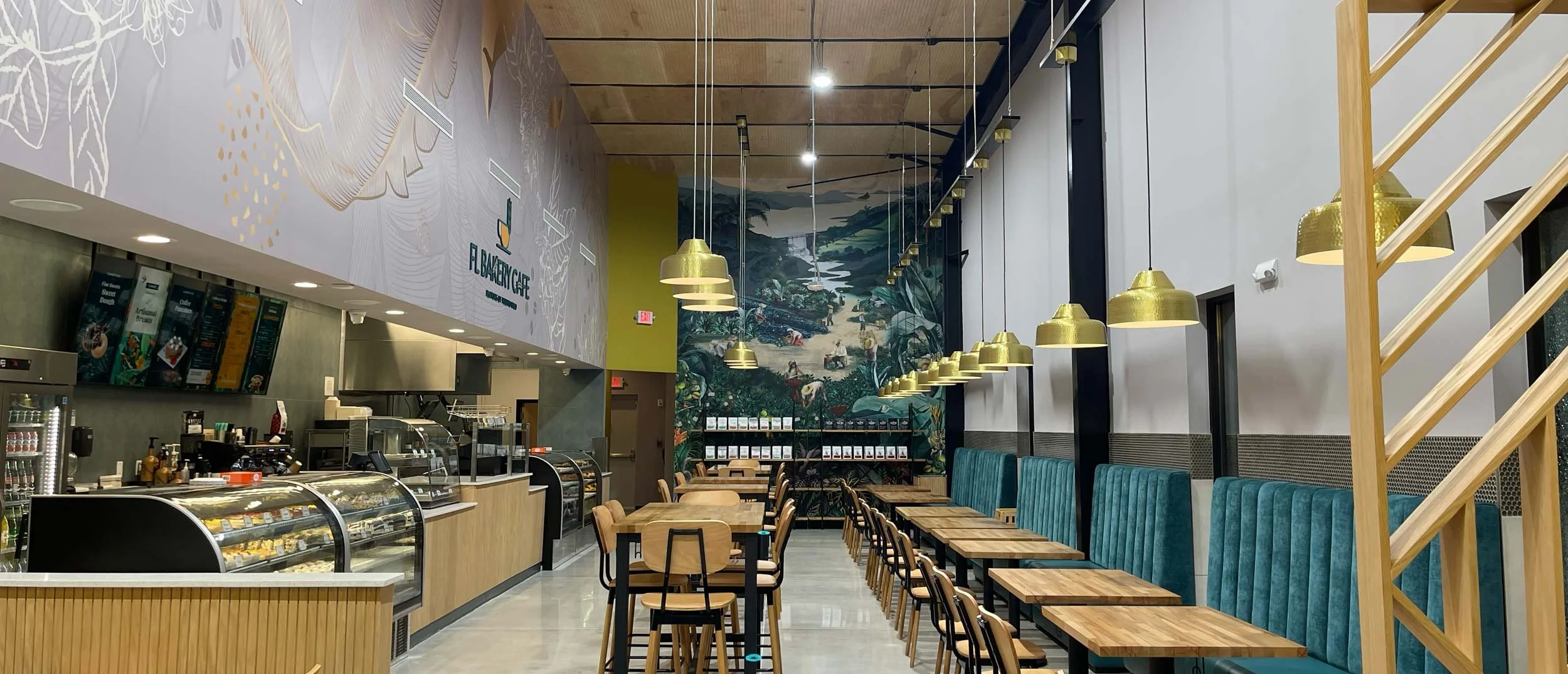
FL Bakery Cafe in St Cloud
One location can survive on instinct.
The owner is present.
Decisions are made quickly. A sign can be adjusted, a menu redesigned, a wall repainted or a new promotion
created without necessarily considering how that decision affects an entire system.
Then comes the second location.
And the third.
Perhaps a new market.
A different building.
A drive-through.
A smaller footprint.
A location hundreds or thousands of miles away.
Suddenly, decisions that once seemed individual have to work together.
That is when branding stops being primarily about identity and begins functioning as infrastructure.
At Candela Creative Group®, we have spent more than 25 years designing brands across physical and digital environments.
In restaurant and hospitality work, some of the most complex projects are not necessarily the largest spaces.
They are the brands that must remain recognizable while adapting to different locations, audiences, buildings and operational realities.
The question becomes:
How do you create a restaurant experience that can change without becoming a different brand every time it changes?
That is where the real work begins.
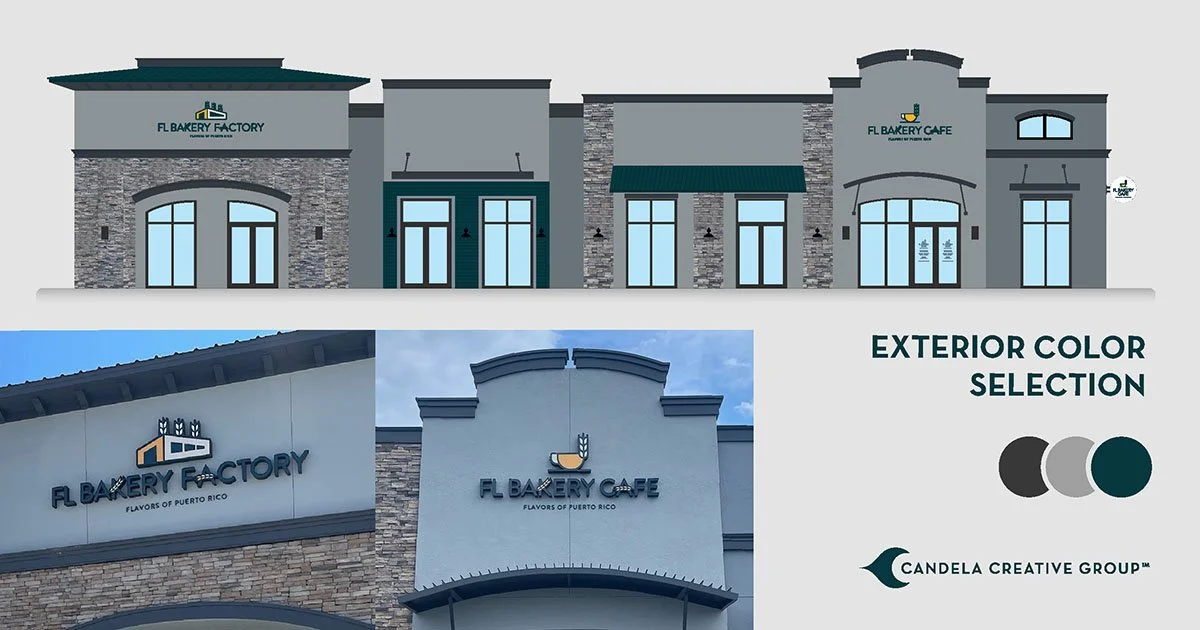
FL Bakery Factory & Cafe Exterior Design
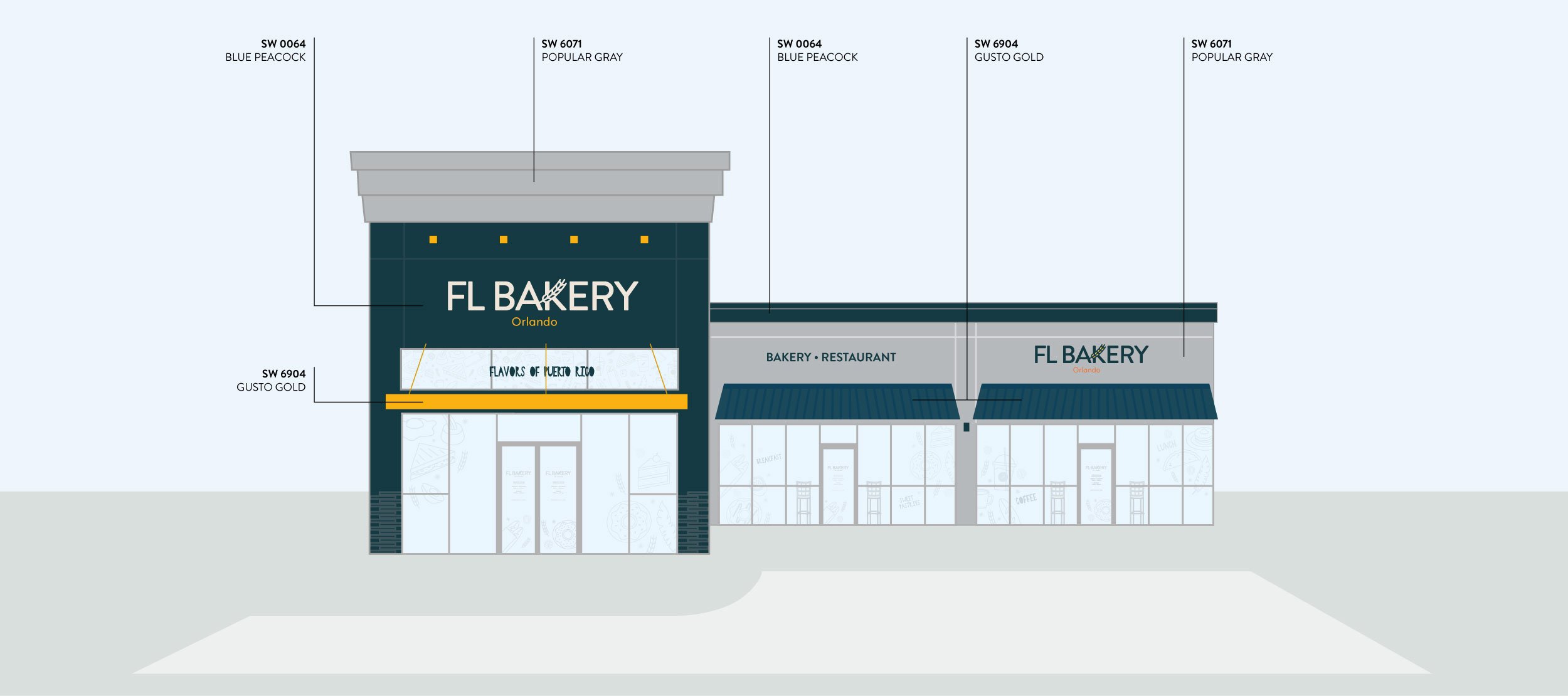
FL Bakery Semoran -Exterior Design
THE LOGO IS ONLY THE BEGINNING
A visual identity establishes recognition.
But customers rarely experience a restaurant as a logo in isolation.
They experience the building from the road.
The entrance.
The exterior sign.
The colors.
The menu. The counter.
The wayfinding.
The packaging they carry home.
The employee uniform.
The website they visited before arriving.
The ordering interface.
The drive-through.
The photography.
The language on a wall.
The receipt.
The social post they encounter three days later.
Each is a separate design problem.
To the customer, however, they are one experience.
That distinction is fundamental to the way we approach restaurant branding.
The objective is not to create a collection of attractive branded objects.
It is to establish a visual, spatial and operational language strong enough
to connect hundreds of individual decisions.
START WITH THE SYSTEM, NOT THE SPACE
One of the easiest mistakes in restaurant development is designing each
location as an isolated project.
The building begins dictating the brand.
A particular wall needs something, so a graphic is created.
There is an empty area over the counter, so another element is added.
A menu board has an unusual dimension, so it receives a new treatment.
The next location presents completely different conditions, and the process starts again.
Eventually, every location may contain the logo and the same corporate colors,
but they no longer feel like the same brand.
A scalable approach reverses that relationship.
Before asking what should happen on a particular wall, we ask:
What are the recognizable elements of this brand?
Which elements must remain constant?
Which can adapt?
Which visual devices belong uniquely to the brand?
How should typography behave?
How does photography work?
How do illustrations work?
What is the hierarchy of information?
What should a customer recognize before they even see the logo?
These decisions create a vocabulary.
The individual restaurant then becomes one expression of that vocabulary.

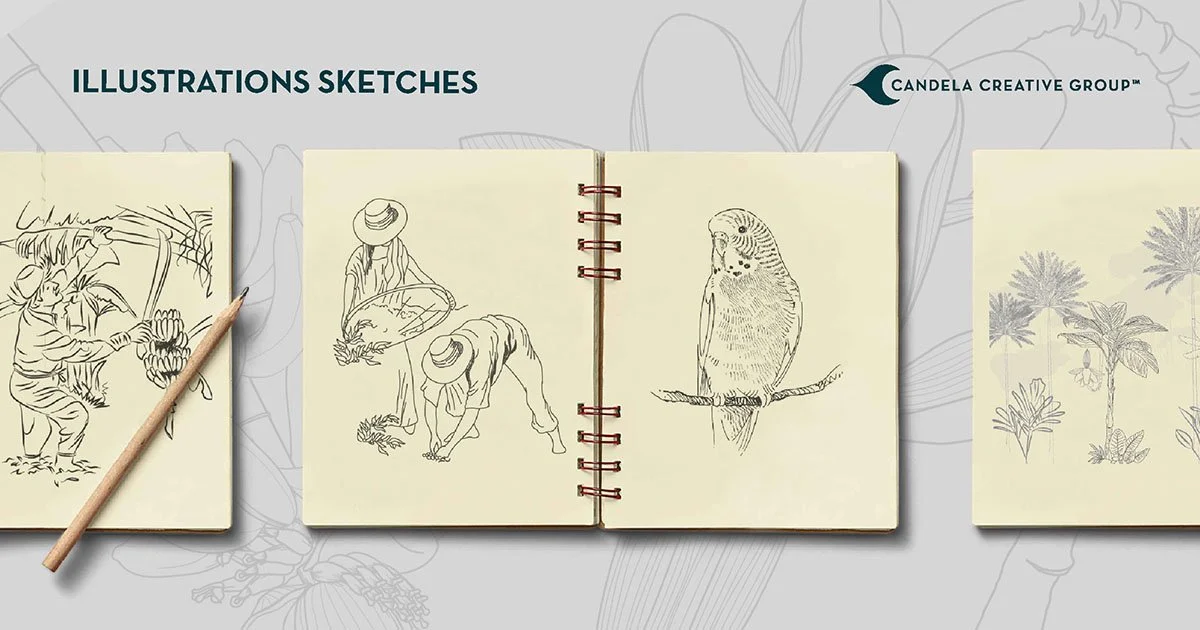
DESIGNING FOR RECOGNITION
Strong restaurant brands have recognizable assets beyond their logos.
Color can become one.
Typography can become another.
A pattern, illustration system, photographic language, material, architectural detail or
characteristic way of presenting information can gradually become proprietary territory.
The goal is not repetition for repetition's sake.
It is recognition.
Ideally, a customer should be able to encounter a piece of packaging, a menu, a section
of a storefront or even a small digital advertisement and understand which brand it belongs
to before consciously searching for the logo.
That level of recognition does not happen through decoration.
It comes from systems.
THE SPACE IS PART OF THE IDENTITY
For restaurant brands, identity eventually becomes physical.
Typography becomes signage.
Color becomes material.
Graphics become walls.
Brand hierarchy becomes wayfinding.
Illustration becomes environmental storytelling.
The identity begins occupying space.
That transition requires a different kind of thinking than graphic design alone.
A two-dimensional composition can be viewed all at once.
A restaurant cannot.
Customers encounter it sequentially.
They see the building from a distance.
They approach.
They look for an entrance.
They decide where to order.
They search for a menu.
They navigate toward pickup, seating, restrooms or an exit.
Every stage introduces communication.
The environment therefore has two responsibilities: it must express
the brand and it must help the customer understand the space.
The strongest branded environments accomplish both simultaneously.
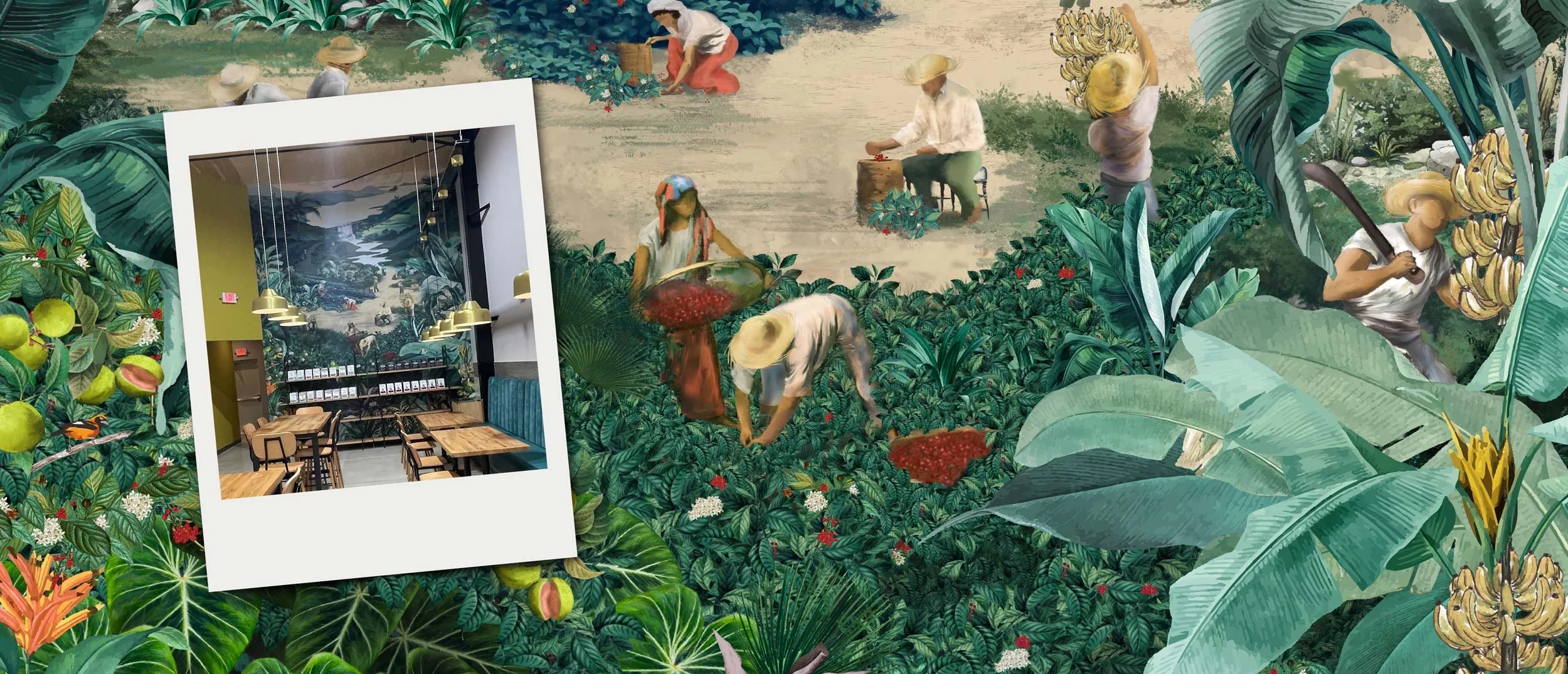
FL BAKERY Original Brand Mural in St Cloud, Florida
THE MENU IS AN INFORMATION SYSTEM
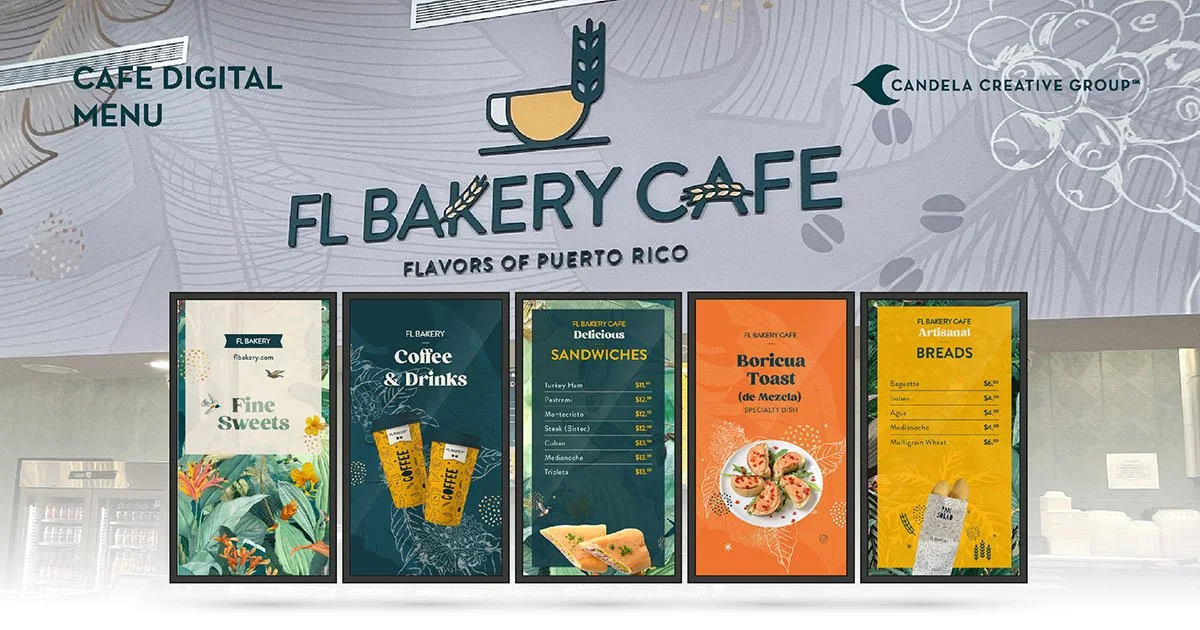
Few pieces of restaurant design are as operationally important as the menu.
A menu is not simply a branded list of products.
It is an information hierarchy that has to communicate quickly, support purchasing
decisions, accommodate pricing changes, introduce new products and function
within the realities of the restaurant.
The design questions are practical.
What does the customer need to understand first?
How many decisions are we asking them to make?
Which products require photography?
Which items should receive visual emphasis?
How will seasonal offerings appear?
What happens when prices change?
Can someone read it from the actual ordering distance?
A beautifully designed menu that slows ordering or confuses customers has failed part of its job.
Brand expression and operational performance have to coexist.
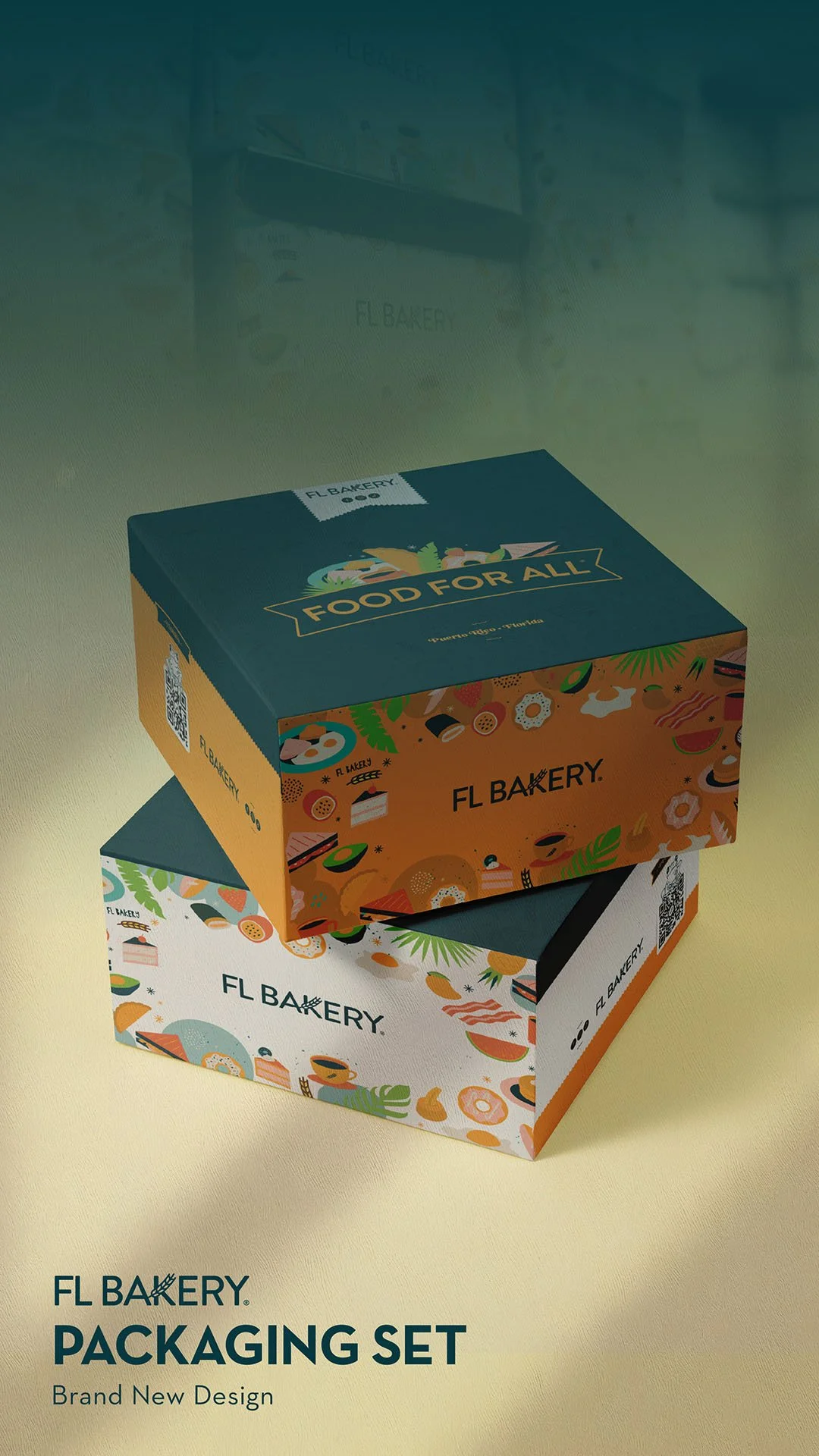
FL Bakery Packaging Design
PACKAGING TAKES THE BRAND OUTSIDE THE BUILDING
Packaging has an unusual role in a restaurant ecosystem.
It leaves.
A cup walks through a shopping center.
A bakery box arrives at an office.
A bag sits inside someone's car.
A catering package enters a meeting.
For a period of time, the customer becomes the distribution system for the brand.
That makes packaging both a functional object and a communication opportunity.
But the same principle applies here: every object does not need to contain every piece of the identity.
A strong system allows the brand to be reduced.
Sometimes a color is enough.
Sometimes typography.
Sometimes an illustration.
Sometimes the logo.
The power comes from having enough recognizable elements to make those decisions intentionally.
THEN THE BRAND BECOMES DIGITAL
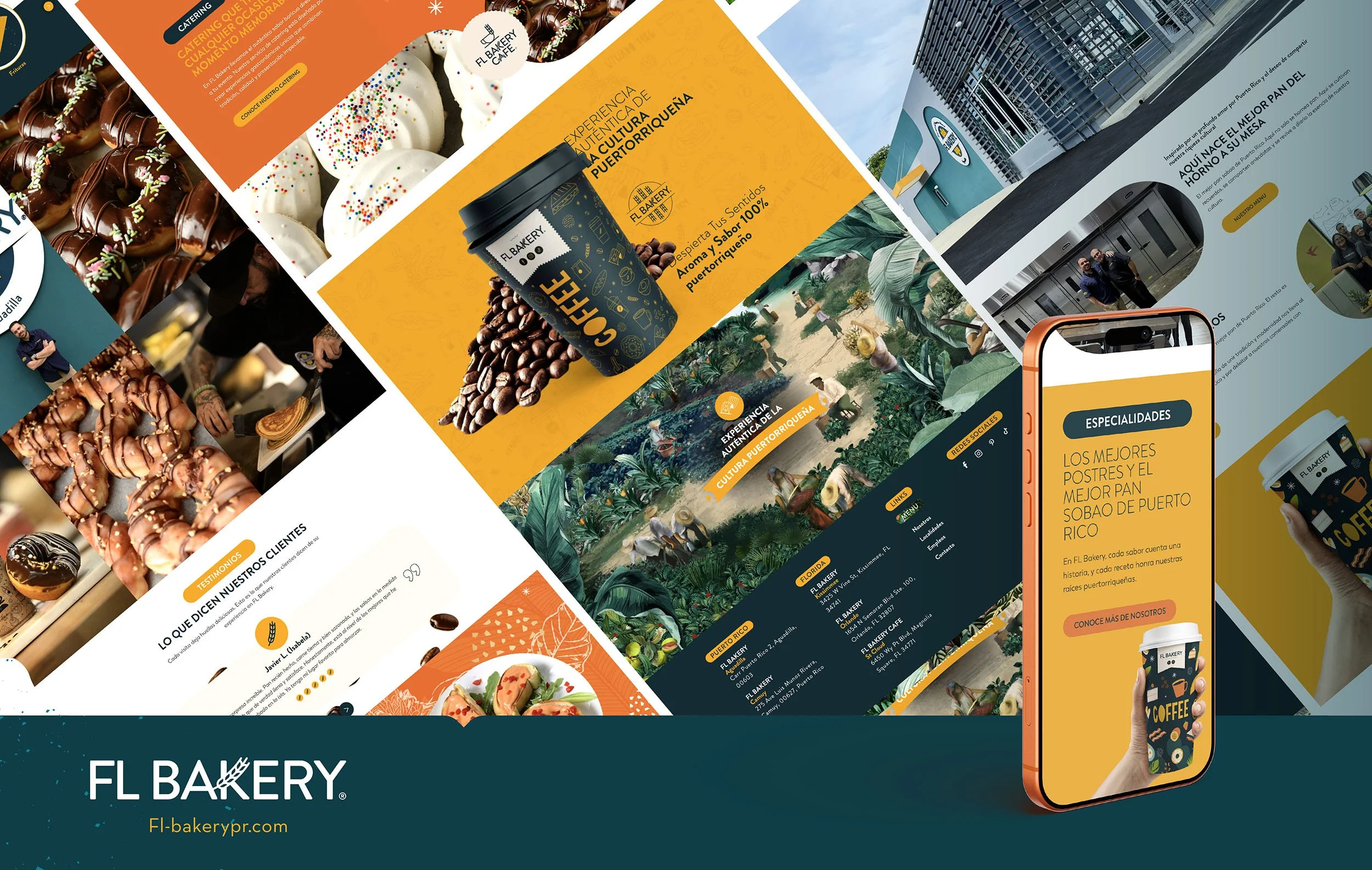
The restaurant experience increasingly begins before the customer reaches the restaurant.
Search.
Maps.
Website.
Menu.
Social media.
Online ordering.
Delivery platforms.
Promotions.
The physical and digital identities cannot behave as unrelated versions of the company.
A customer who discovers a restaurant online and then visits the physical location should
feel continuity between those experiences.
The scale changes.
The interaction changes.
The underlying brand should not.
This is why we increasingly think about restaurant identity, spatial design and digital systems
as interconnected disciplines rather than separate deliverables.
THE SECOND REGION CHANGES THE QUESTION
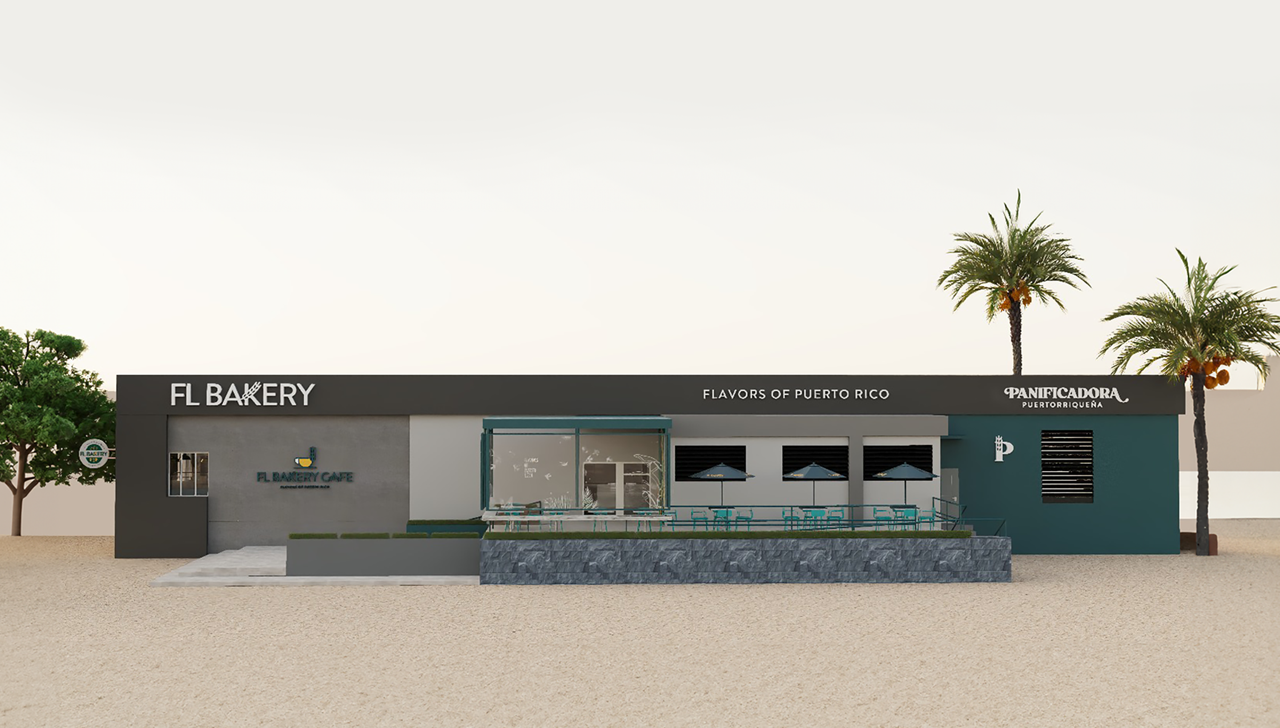
FL Bakery Camuy
The first restaurant asks:
What should this place look like?
A growing restaurant brand has to ask a different question:
What makes every future location unmistakably ours?
Those questions lead to very different design decisions.
A second-generation location may occupy a completely different building.
Ceiling heights change.
Facades change.
Municipal signage regulations change.
Customer flow changes.
Budgets change.
Markets change.
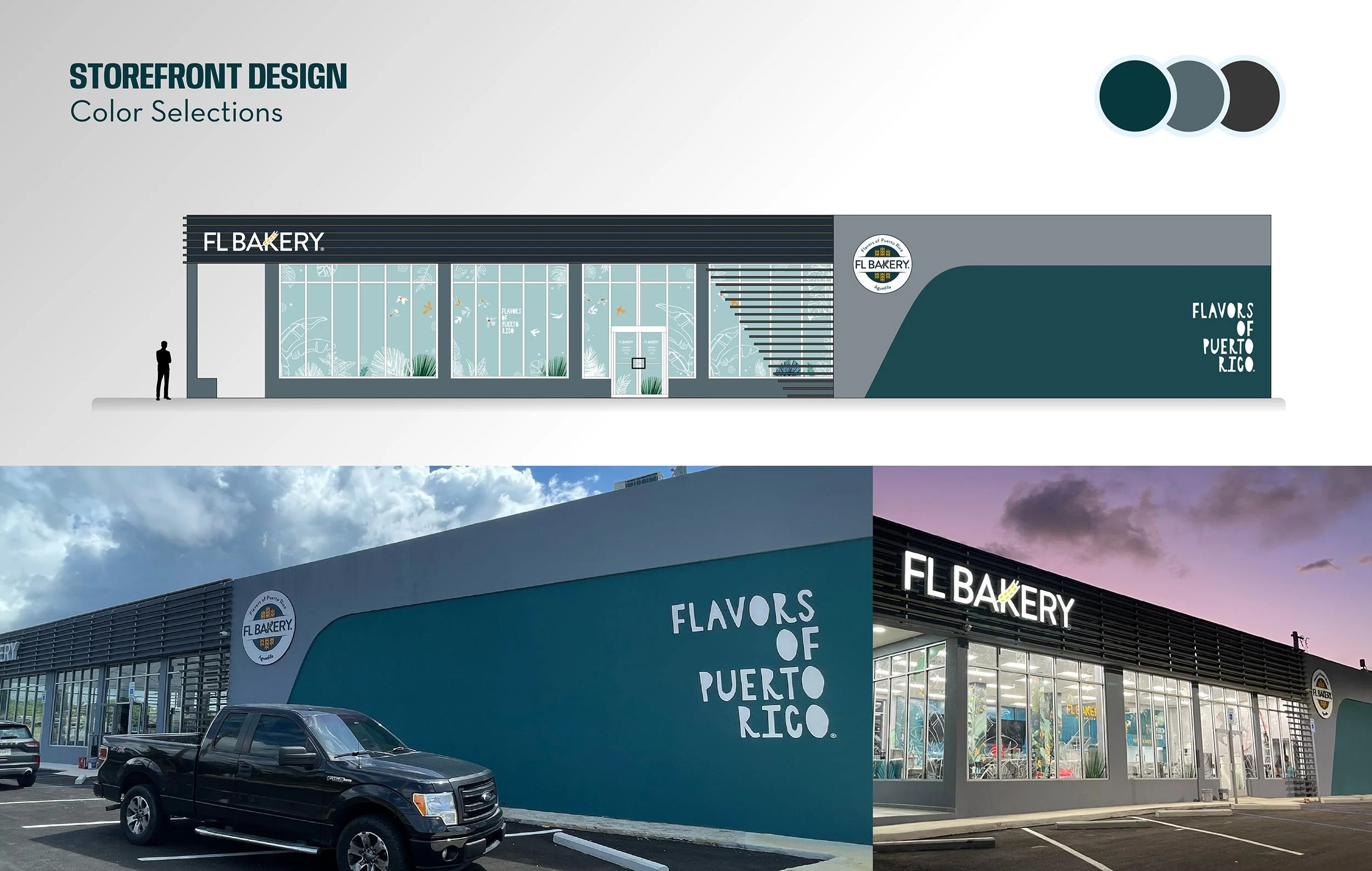
FL Bakery Aguadilla Exterior
In the case of brands operating across regions, culture and customer expectations can change as well.
Trying to reproduce the first location exactly is rarely the answer.
Instead, we identify what we call the brand constants and the brand variables.
Constants protect recognition.
Variables allow adaptation.
The identity might remain constant while the architecture changes.
A graphic language might remain recognizable while individual illustrations respond to a particular community.
Materials might shift while the color hierarchy remains intact.
The restaurant evolves.
The brand remains recognizable.
LOCAL RELEVANCE WITHOUT BRAND FRAGMENTATION
Regional expansion introduces another challenge.
A restaurant should not feel indifferent to the community in which it operates.
But localization can easily become fragmentation.
Every location cannot reinvent the company.
The opportunity is to create a system with enough structure to maintain identity and
enough flexibility to acknowledge place.
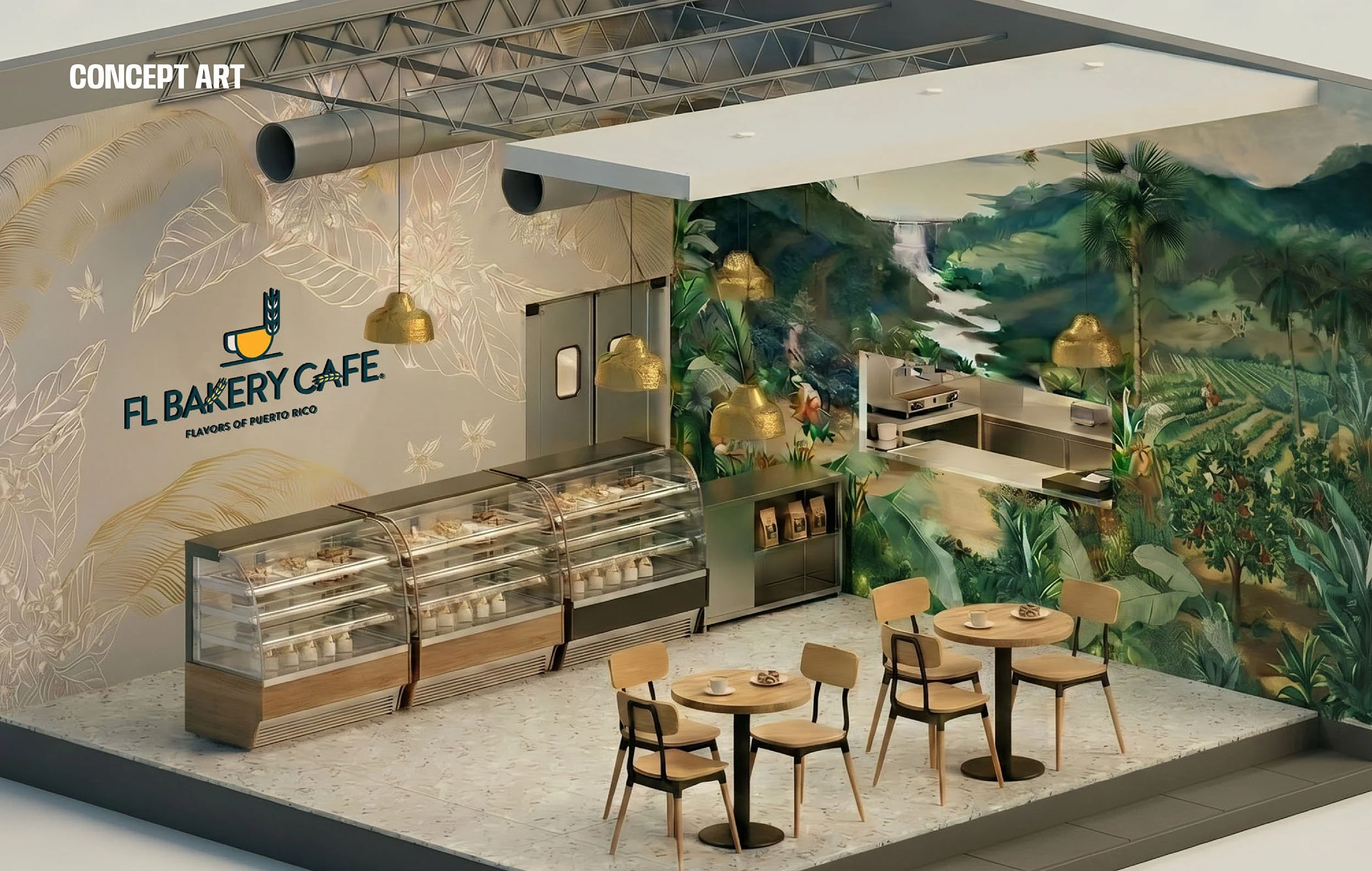
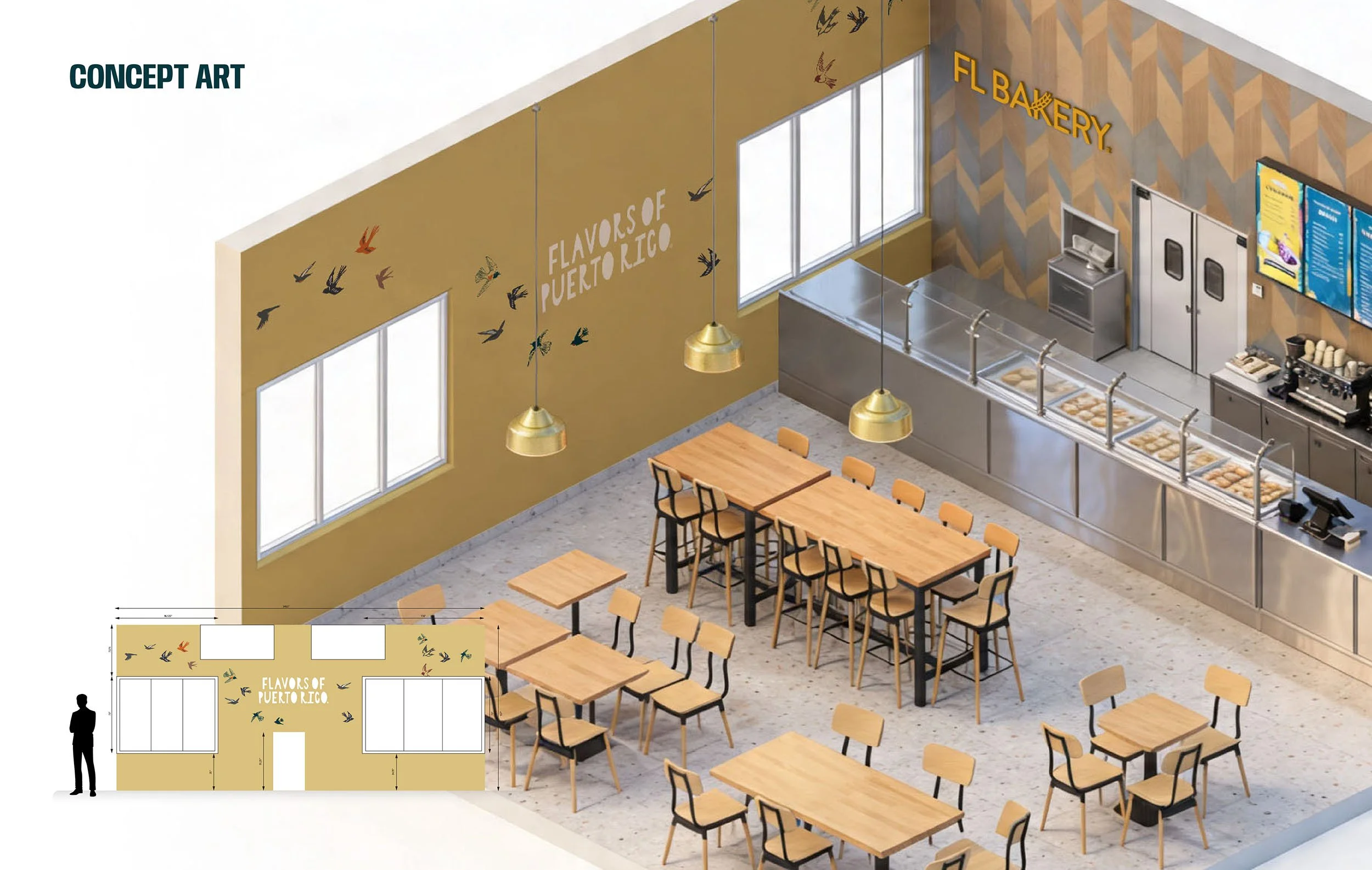
We have encountered this directly while developing restaurant environments
across Florida and Puerto Rico.
Different markets, building conditions and audiences require adaptation.
The solution is not choosing between consistency and individuality.
It is designing a system capable of supporting both.

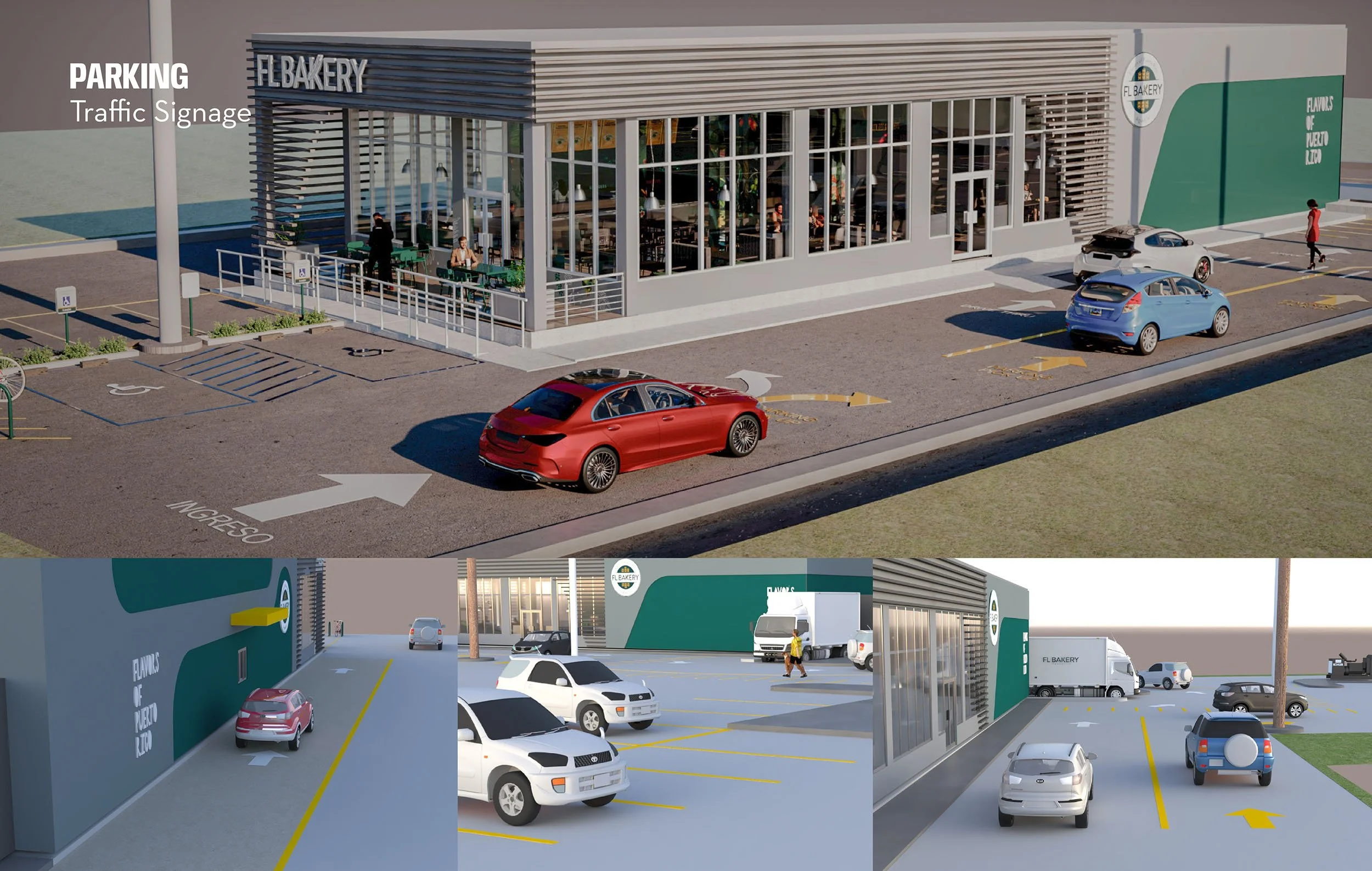
THE DETAILS THAT NOBODY CALLS BRANDING
Some of the most consequential brand decisions are rarely introduced as branding projects.
Where should customers park?
How visible is the entrance?
Can someone understand the drive-through before reaching the menu?
Where does pickup happen?
What information belongs on the door?
What happens when the restaurant is closed?
Where do delivery drivers go?
How are temporary promotions displayed without destroying the permanent environment?
Where does a seasonal sign belong?
What happens when operations introduce something the original design never anticipated?
These may sound like small decisions.
Multiply them across five, ten or fifty locations and they become the brand.
That is why restaurant branding cannot end with a style guide.
The system has to survive contact with the real world.
CONSISTENCY DOES NOT MEAN MAKING EVERYTHING THE SAME
This may be the most important distinction.
Consistency is not duplication.
The objective of a scalable restaurant brand is not to make every building identical.
It is to make every experience related.
A strong identity should be able to expand and contract.
It should work on a twenty-foot facade and a two-inch label.
It should accommodate a flagship location and a small-format store.
It should survive a renovation.
It should support new products.
It should adapt to technologies that did not exist when the first location opened.
And it should still feel unmistakably like the same company.
That is what makes a brand system valuable.
BRANDING BECOMES BUSINESS INFRASTRUCTURE
When restaurant branding is treated as a one-time expense, businesses
tend to accumulate design decisions.
A new menu here.
A sign there.
A promotional graphic from one vendor.
Packaging from another.
A website update.
A remodeled location.
A new store.
Each decision may solve the immediate problem while slowly weakening the larger system.
Growing brands need another model.
Branding has to be maintained much like the other infrastructure supporting the business.
Not because everything needs constant redesign, but because every new business decision
creates another point where the brand can either become stronger or more fragmented.
The purpose of a brand system is to make those decisions easier.
BUILDING SOMETHING THAT CAN GROW
The best time to think about scalability is not when a company reaches its tenth location.
It is when the possibility of the second begins to feel real.
Because the real measure of a restaurant identity is not simply how beautiful the first location looks on opening day.
It is what happens afterward.
Can another architect understand it?
Can another fabricator reproduce it?
Can the marketing team extend it?
Can a new location adapt it?
Can employees use it?
Can customers recognize it?
Can the system absorb change without losing itself?
A successful restaurant brand is not a finished composition.
It is a framework for making thousands of future decisions.
And when that framework is designed correctly, growth does not have to dilute the brand.
It can make the brand stronger.
Candela Demarco— Candela Creative Group®
Branding Strategies + Spatial Design + Digital Systems
Over 25 Years of Excellence